1. Insulation = Big Impact
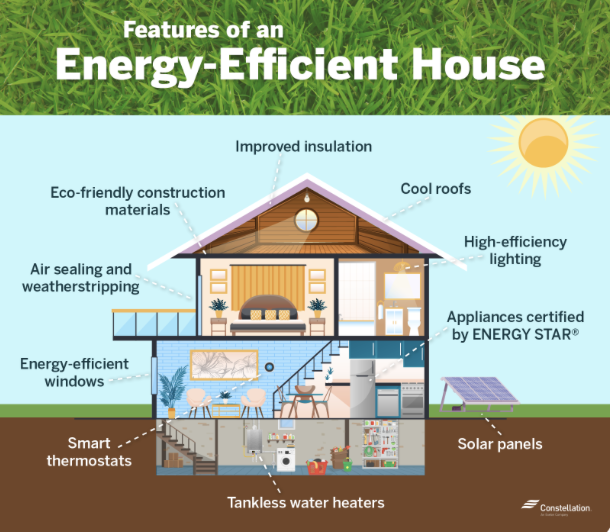
Adding insulation in attics, crawl spaces, and basements can reduce heating and cooling costs by about 10%. Since heating and cooling are typically the largest energy expenses in a home, this is one of the highest-return improvements you can make.
2. Seal the Leaks
Air leaks around doors, windows, and ducts force your HVAC system to work overtime. Weatherstripping, caulking, and door sweeps are inexpensive fixes that can noticeably cut drafts and energy waste.
3. Upgrade Your HVAC System
Older systems lose efficiency over time. Replacing them with high-efficiency units certified by ENERGY STAR can significantly reduce energy use. Regular servicing and filter changes also keep systems running at peak performance.
4. Smart Thermostats = Easy Savings
The Environmental Protection Agency estimates homeowners save about 8% on utility bills with smart thermostats that automatically adjust temperatures when you’re away.
☀️ Solar Panels: A Long-Term Game Changer
Solar energy systems can dramatically cut or even eliminate electricity bills depending on system size and local rates. Beyond savings, solar increases home value and appeals to eco-conscious buyers. Incentives, tax credits, and net-metering programs often improve the return on investment.
🪟 Efficiency Buyers Care About
According to the REALTORS® Residential Sustainability Report, windows, doors, and siding rank among the most important energy-efficient features for buyers. Upgrading to double- or triple-pane windows improves insulation and indoor comfort year-round.
⚡ Everyday Energy Wins
– Set your water heater to 120°F (water heating makes up about 18% of home energy use per the U.S. Department of Energy).
– Use ceiling fans to reduce AC demand.
– Close blinds to block summer heat and trap winter warmth.
– Unplug electronics or use switchable power strips.
– Choose efficient appliances — Consumer Reports notes that top- or bottom-freezer refrigerators typically use less energy than side-by-side models.
💡 Bottom Line
Energy efficiency lowers bills now and boosts resale appeal later. The biggest savings usually come from insulation, air sealing, HVAC upgrades, and smart controls, while solar offers powerful long-term value. Small changes add up — and buyers are paying attention.

Leave a Reply